Chapter 3: Scenarios & Selection
Application scenarios and selection criteria for unified network security solutions
3.1 Scenario 1: Small Office Network (50-100 Employees)
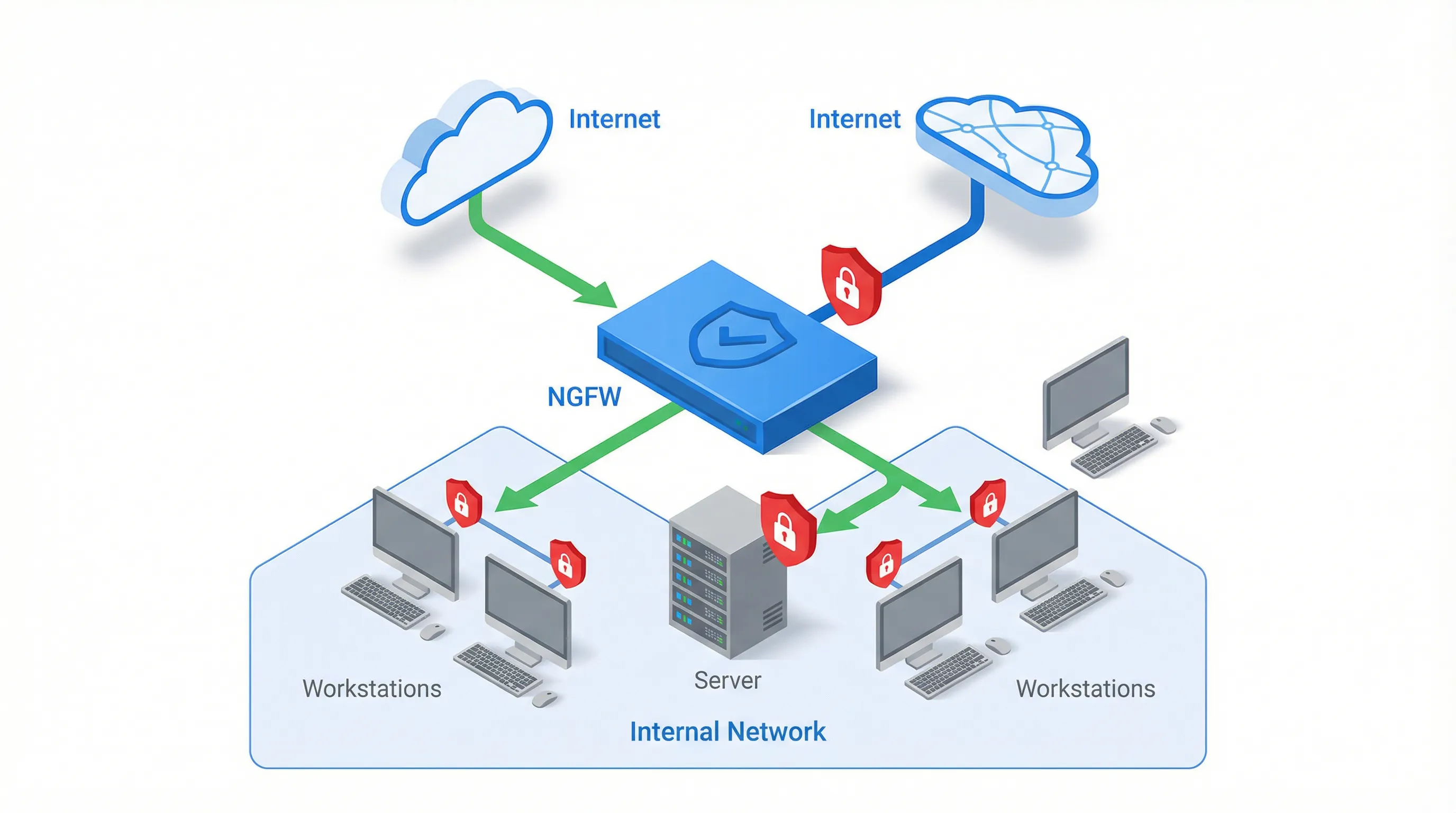
Small offices with 50-100 employees typically have a simple network topology with limited IT resources. The security solution focuses on essential protection with minimal operational complexity.
Key Requirements
- Single NGFW at network boundary for unified threat prevention
- EDR deployment on all endpoints for malware protection
- Basic SIEM for log collection and compliance reporting
- Simple management with minimal dedicated security staff
Recommended Configuration
- NGFW: Entry-level model with 500Mbps-1Gbps throughput, IPS, AV, and application control
- EDR: Cloud-based management with 50-100 endpoint licenses
- SIEM: Basic log collection appliance or cloud service with 6-month retention
- Total Investment: $15,000-$30,000 initial + $5,000-$10,000 annual subscription
3.2 Scenario 2: Medium Enterprise (100-500 Employees)
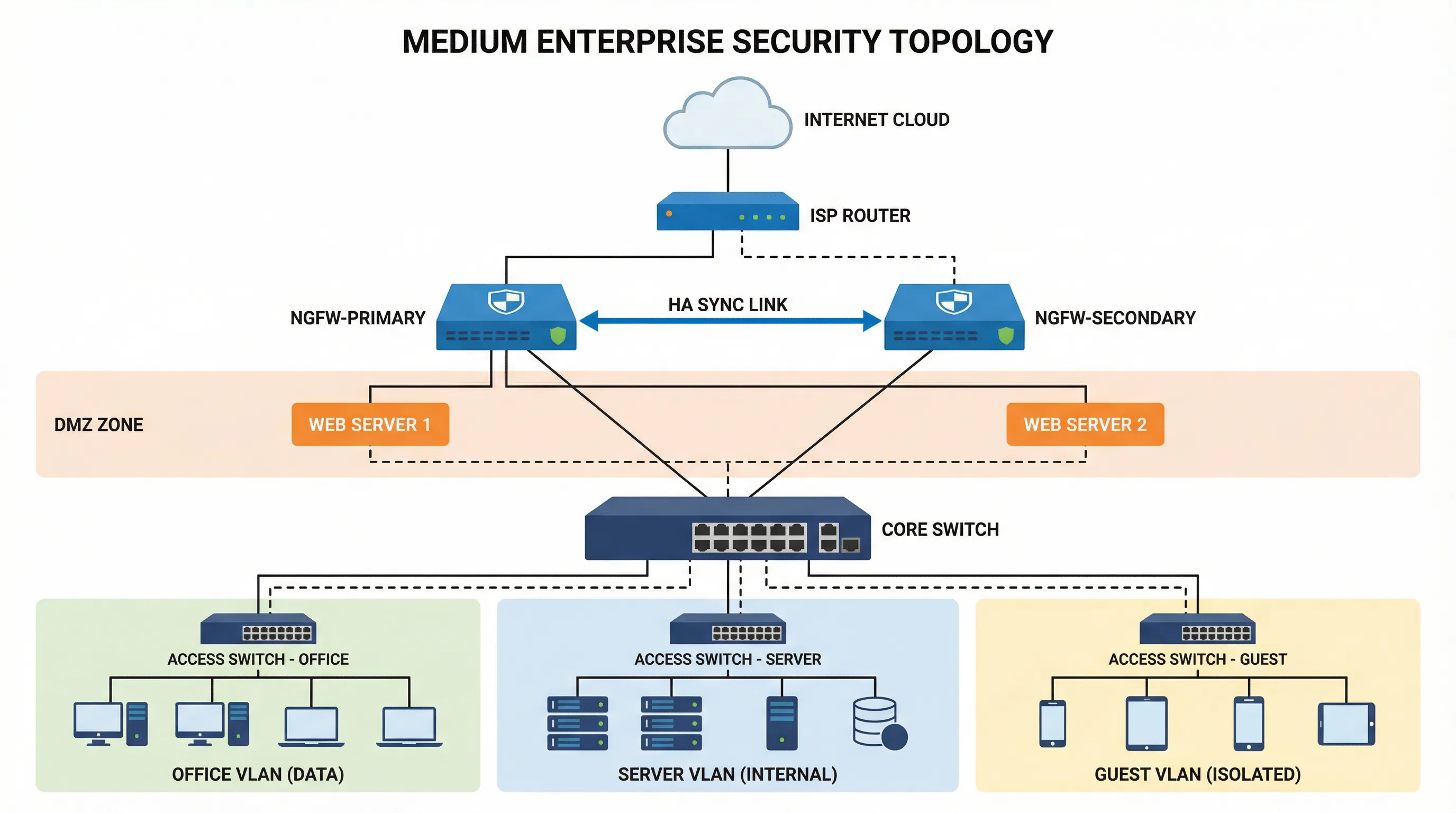
Medium enterprises require more sophisticated security architecture with high availability, network segmentation, and dedicated DMZ for public-facing services.
Key Requirements
- High availability NGFW configuration to ensure business continuity
- Network segmentation with VLANs for office, server, and guest networks
- DMZ zone for web servers and public services
- Comprehensive SIEM with correlation and automated alerting
- Vulnerability scanning for proactive risk management
Recommended Configuration
- NGFW: Dual firewalls in active-passive HA, 2-5Gbps throughput
- EDR: On-premise or hybrid management platform with 100-500 licenses
- SIEM: Enterprise platform with 12-month retention and correlation rules
- Vulnerability Scanner: Network-based scanner with quarterly scanning schedule
- Total Investment: $50,000-$100,000 initial + $20,000-$40,000 annual
3.3 Scenario 3: E-Commerce Platform Protection
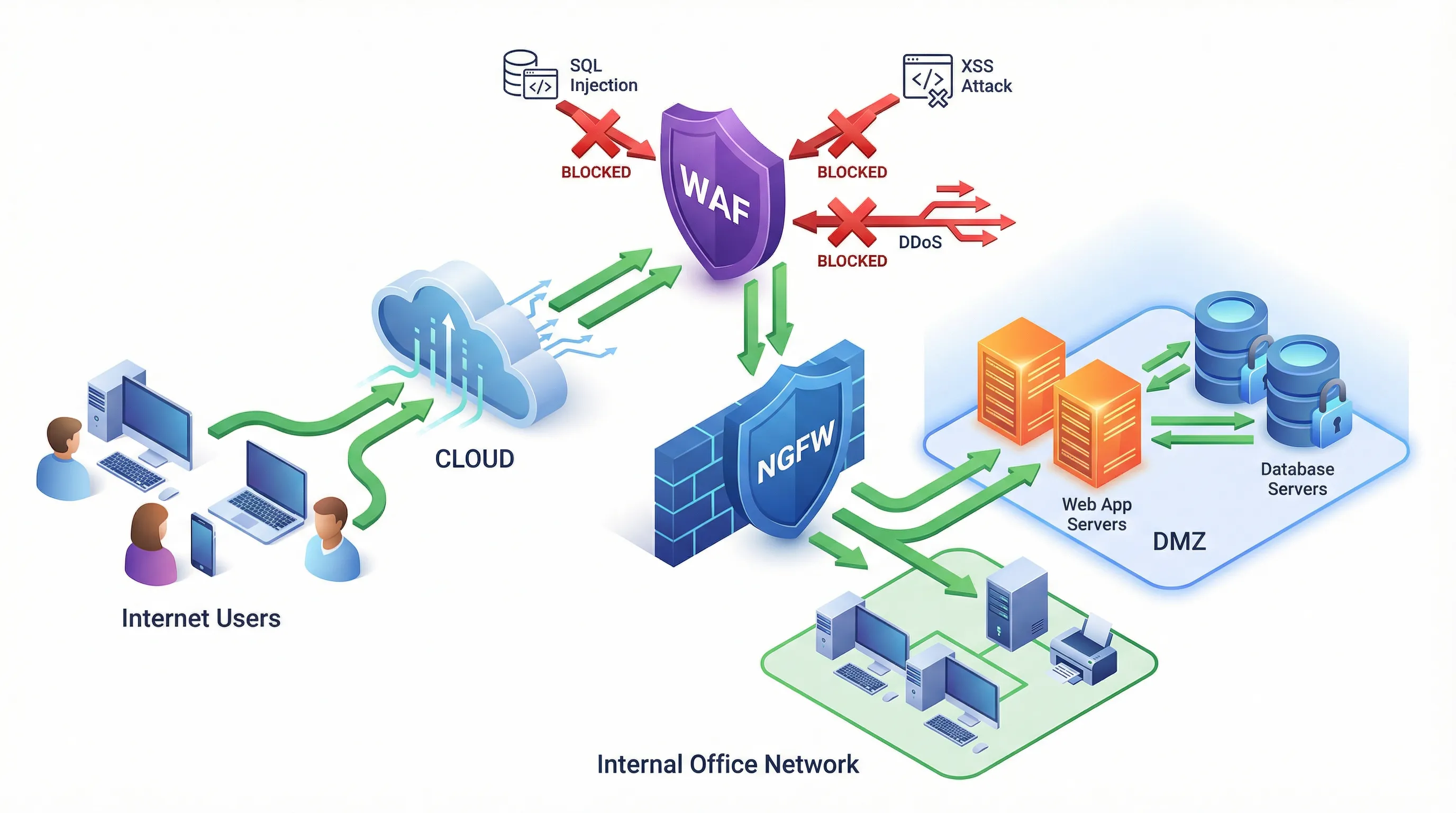
E-commerce platforms face constant web application attacks and require specialized WAF protection in addition to network-level security.
Key Requirements
- WAF for OWASP Top 10 protection (SQL injection, XSS, etc.)
- DDoS mitigation capabilities for availability assurance
- Database security and encryption for payment data protection
- PCI-DSS compliance for credit card processing
- 24/7 security monitoring and incident response
Recommended Configuration
- NGFW: High-performance model with 5-10Gbps throughput
- WAF: Dedicated WAF appliance or cloud WAF service with custom rules
- EDR: Advanced EDR with threat hunting capabilities
- SIEM: Enterprise SIEM with PCI-DSS compliance reporting
- Total Investment: $80,000-$150,000 initial + $30,000-$60,000 annual
3.4 Scenario 4: Secure Remote Work
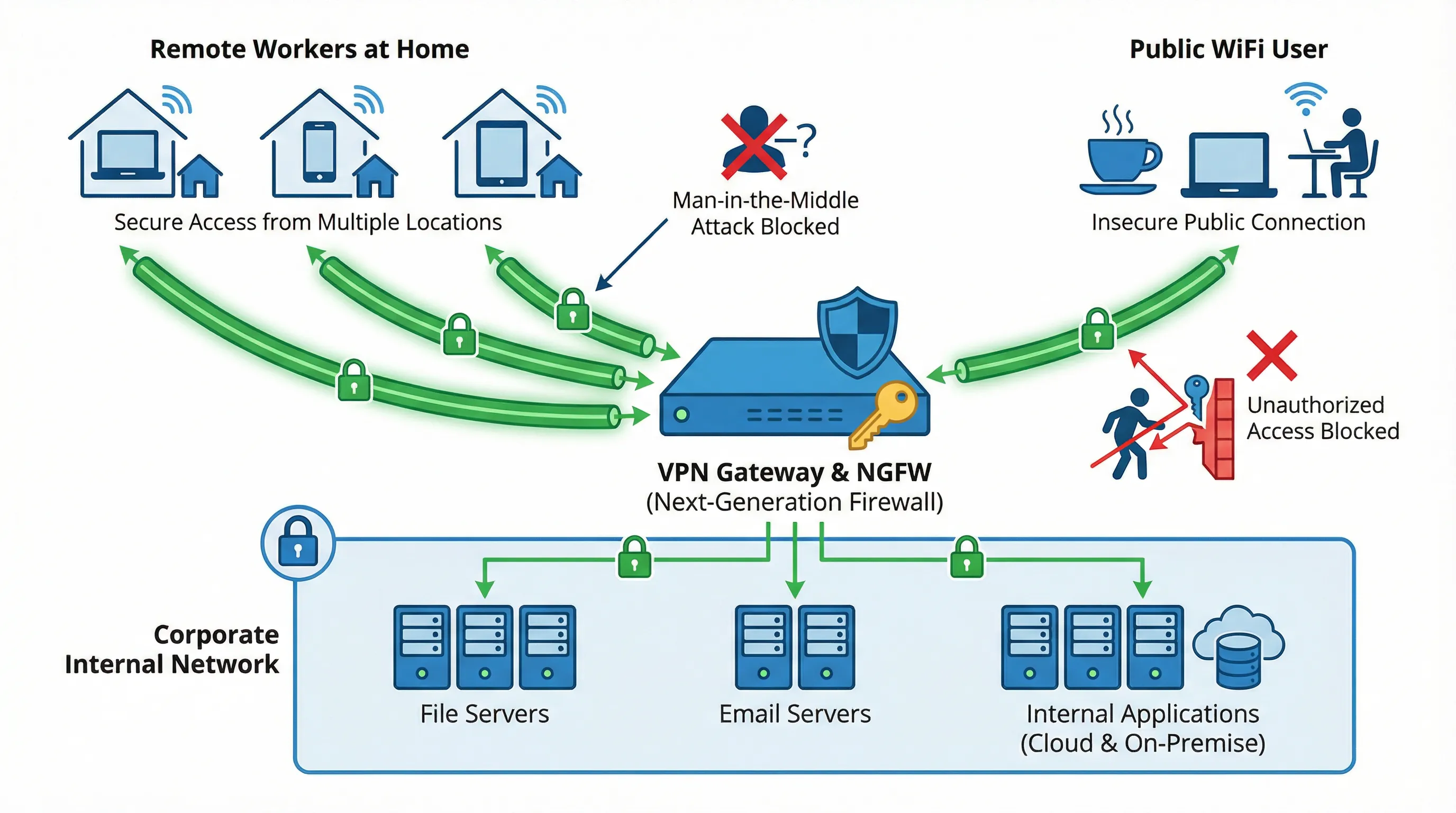
Organizations with significant remote workforce require secure VPN access, endpoint protection, and zero-trust network access controls.
Key Requirements
- VPN gateway with sufficient capacity for concurrent remote users
- Multi-factor authentication (MFA) for remote access
- EDR on all remote endpoints including BYOD devices
- Network access control (NAC) for device posture checking
- Encrypted communication channels for all remote sessions
Recommended Configuration
- NGFW with VPN: Support for 100-500 concurrent VPN users with SSL and IPSec
- MFA Solution: Token-based or mobile app MFA for all remote access
- EDR: Cloud-managed EDR with remote device visibility
- NAC: Pre-admission health checking and post-admission monitoring
- Total Investment: $40,000-$80,000 initial + $15,000-$30,000 annual
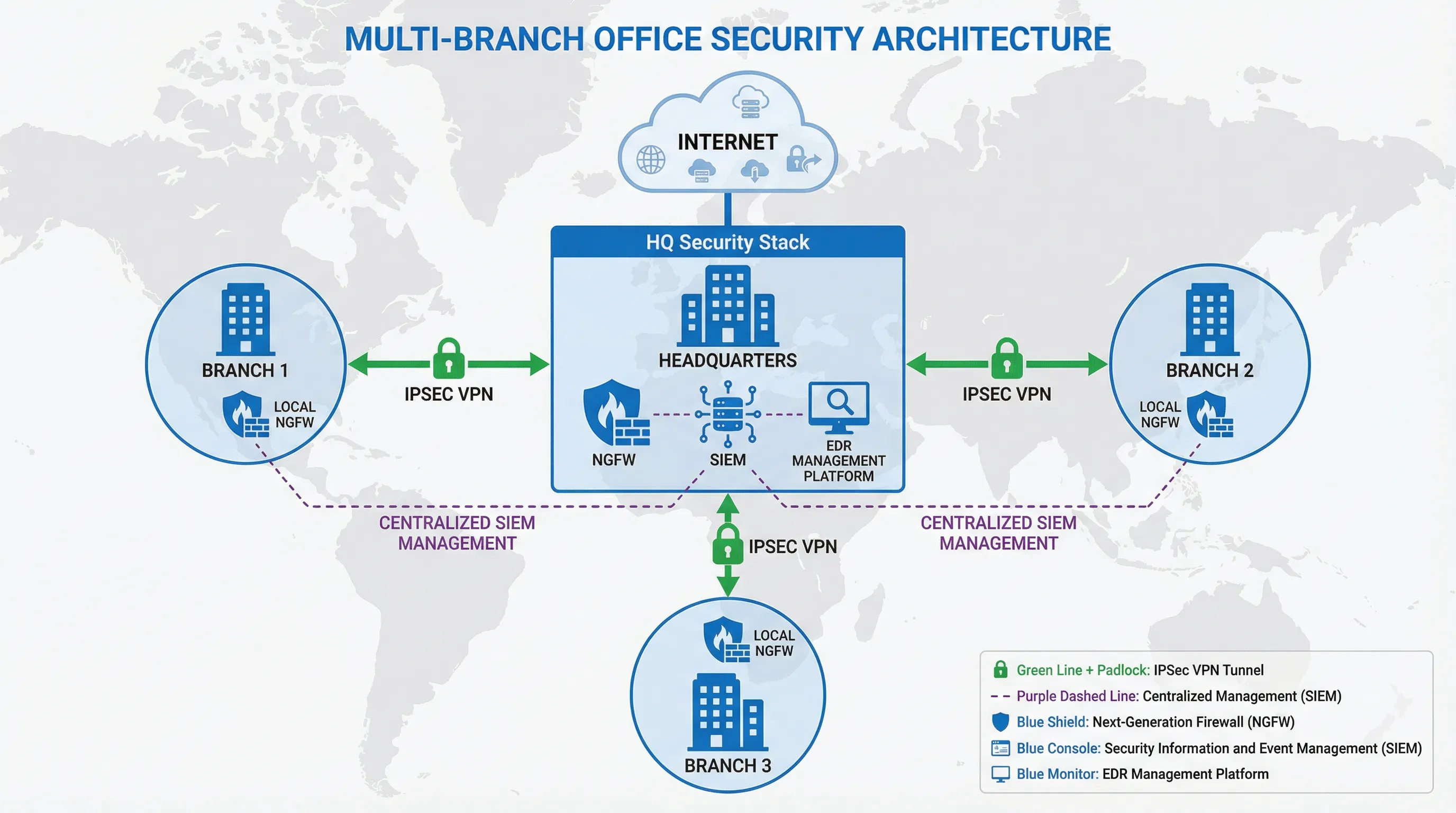
3.5 Scenario 5: Multi-Branch Office Security
Organizations with multiple branch offices require centralized security management while providing local protection at each site.
Key Requirements
- Site-to-site VPN mesh for secure inter-branch communication
- Local NGFW at each branch for internet breakout and protection
- Centralized SIEM at headquarters collecting logs from all sites
- Unified policy management and configuration across all sites
- WAN optimization for efficient VPN traffic
Recommended Configuration
- HQ NGFW: High-capacity firewall (5-10Gbps) with VPN concentrator
- Branch NGFW: Smaller firewalls (500Mbps-1Gbps) at each branch
- SIEM: Centralized SIEM with multi-site log aggregation
- Management Platform: Unified security management for all devices
- Total Investment: $60,000-$120,000 initial + $25,000-$50,000 annual
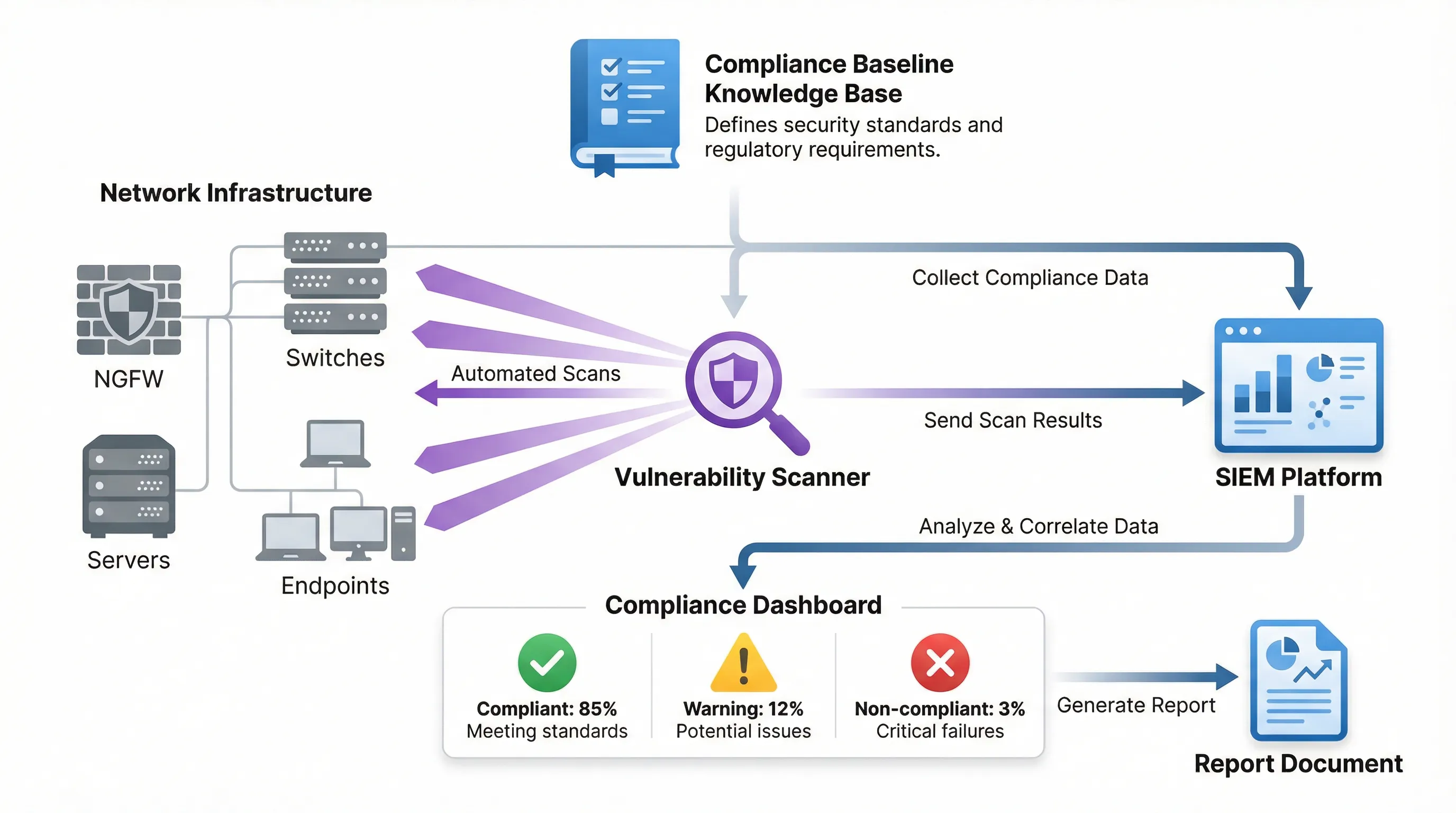
3.6 Scenario 6: Compliance Monitoring & Reporting
Organizations in regulated industries require continuous compliance monitoring, vulnerability assessment, and automated reporting capabilities.
Key Requirements
- Compliance baseline management with industry standards (ISO 27001, NIST, etc.)
- Automated vulnerability scanning and remediation tracking
- Configuration compliance checking for all security devices
- Automated compliance report generation for auditors
- Continuous monitoring with real-time compliance dashboards
Recommended Configuration
- Vulnerability Scanner: Enterprise scanner with compliance templates
- SIEM: Advanced SIEM with compliance reporting modules
- Configuration Management: Automated configuration backup and compliance checking
- GRC Platform: Governance, Risk, and Compliance platform integration
- Total Investment: $70,000-$130,000 initial + $28,000-$55,000 annual
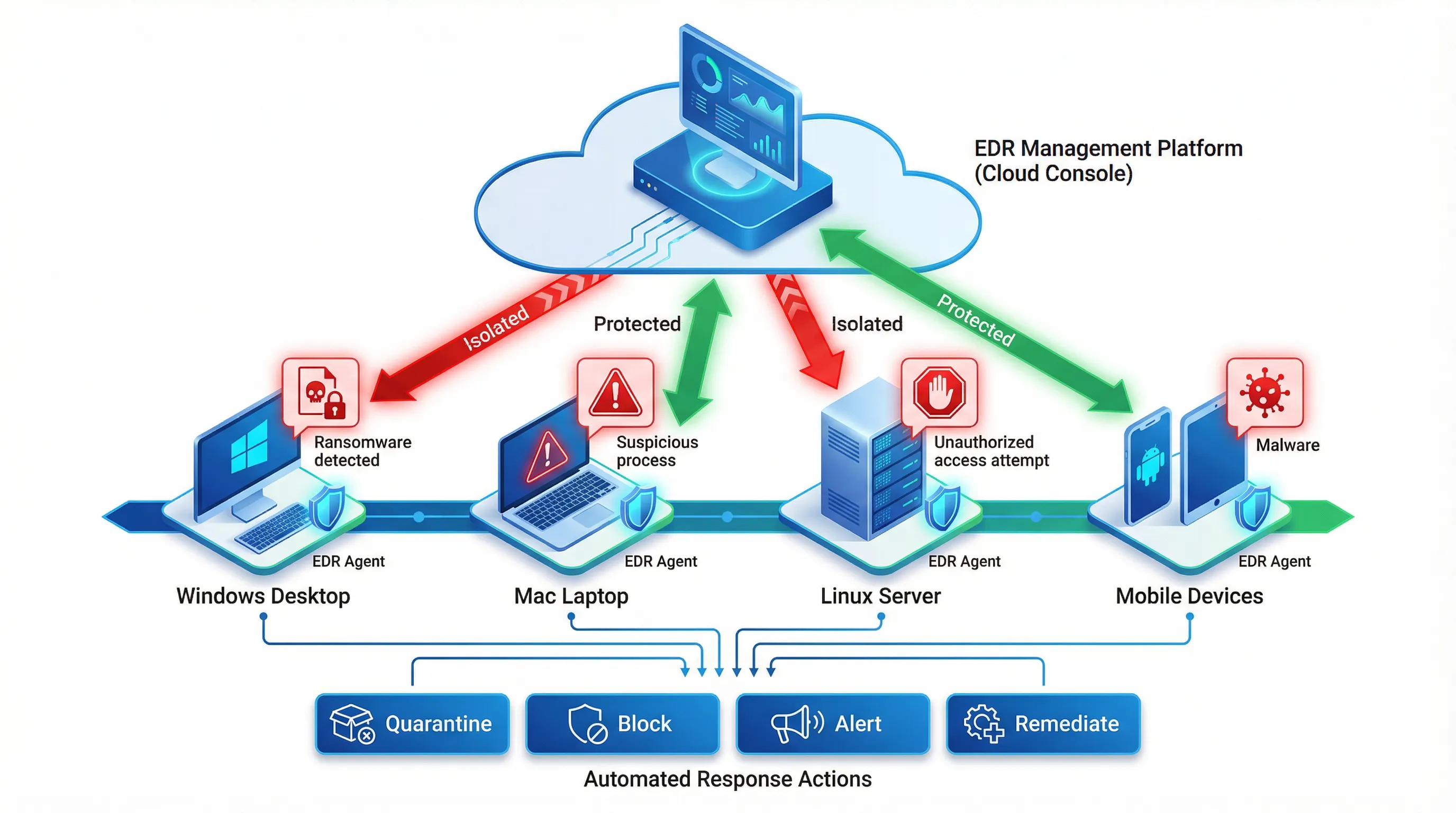
3.7 Scenario 7: Comprehensive Endpoint Protection
Organizations requiring advanced endpoint security across diverse device types including Windows, Mac, Linux, and mobile platforms.
Key Requirements
- Cross-platform EDR support for Windows, macOS, Linux, iOS, and Android
- Behavioral analysis and machine learning for zero-day threat detection
- Automated threat isolation and remediation
- Forensic investigation capabilities with timeline reconstruction
- Integration with SIEM for correlated threat analysis
Recommended Configuration
- EDR Platform: Enterprise EDR with multi-platform support and threat intelligence
- Management Console: Centralized cloud or on-premise management
- Threat Intelligence: Integration with commercial threat feeds
- SOAR Integration: Security Orchestration for automated response playbooks
- Total Investment: $50,000-$100,000 initial + $20,000-$40,000 annual
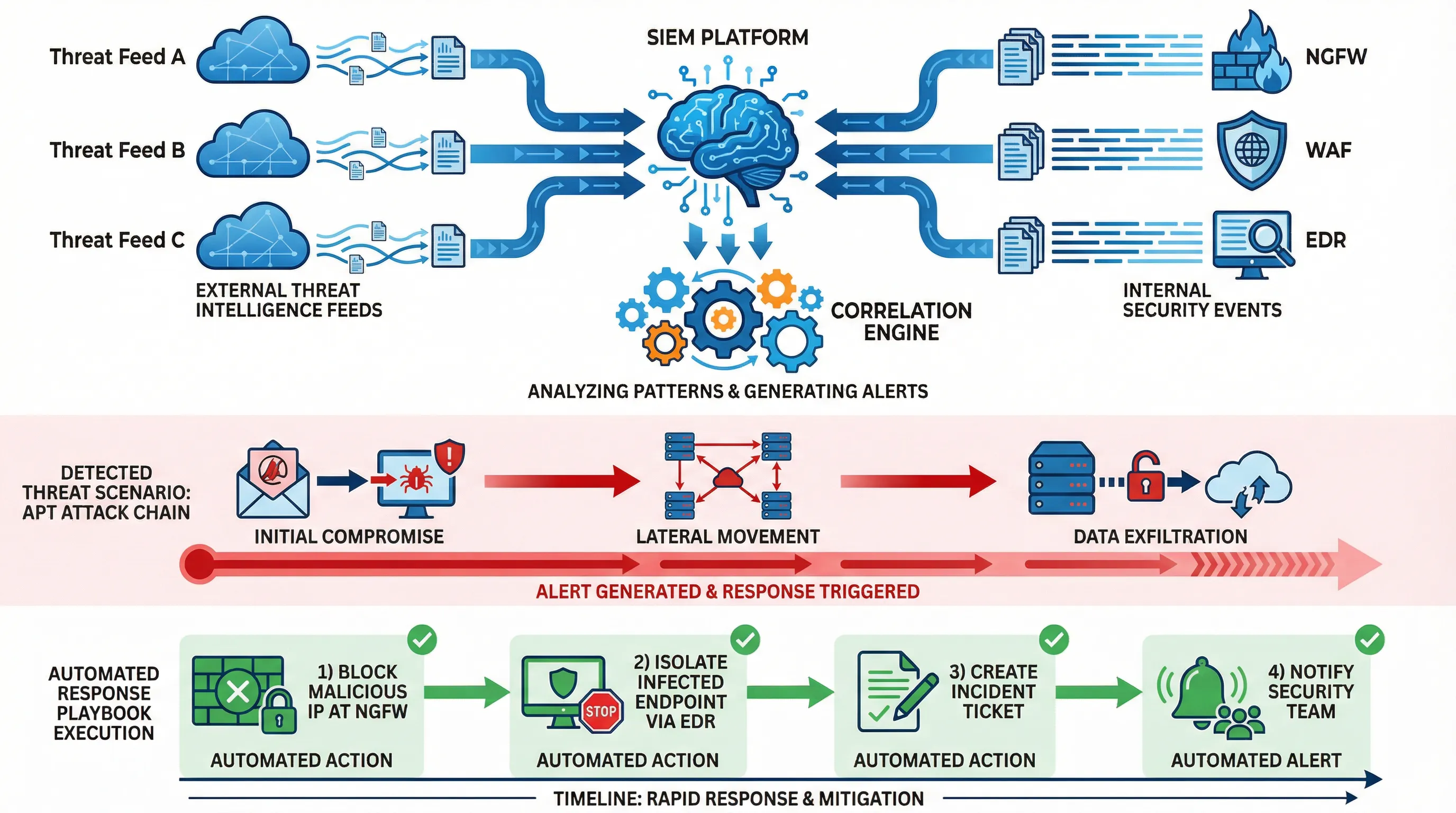
3.8 Scenario 8: Threat Intelligence & Automated Response
Advanced security operations with threat intelligence integration, correlation analysis, and automated incident response capabilities.
Key Requirements
- Integration with multiple threat intelligence feeds (commercial and open-source)
- Advanced correlation engine for multi-stage attack detection
- Automated response playbooks for common threat scenarios
- Threat hunting capabilities with behavioral analytics
- Integration with ticketing systems for incident management
Recommended Configuration
- SIEM: Advanced SIEM with threat intelligence platform (TIP) integration
- SOAR: Security Orchestration, Automation and Response platform
- Threat Intelligence: Commercial threat feeds and STIX/TAXII integration
- Sandbox: Malware analysis sandbox for unknown file analysis
- Total Investment: $90,000-$180,000 initial + $35,000-$70,000 annual
3.9 Scenario Selection Matrix
The following decision matrix helps organizations select the appropriate scenario based on their size, industry, and security requirements. Consider multiple scenarios can be combined for comprehensive protection.
Selection Criteria
- Organization Size: Number of employees and network complexity
- Industry Regulations: Compliance requirements (PCI-DSS, HIPAA, SOX, etc.)
- Risk Profile: Threat landscape and business criticality
- IT Resources: Available security staff and expertise
- Budget: Initial investment and ongoing operational costs
- Business Model: Remote work, e-commerce, multi-site operations
Implementation Approach
Organizations should adopt a phased implementation approach, starting with foundational security (Scenario 1 or 2) and progressively adding specialized capabilities based on business needs and risk assessment. The modular architecture allows for incremental expansion without requiring complete system replacement.